
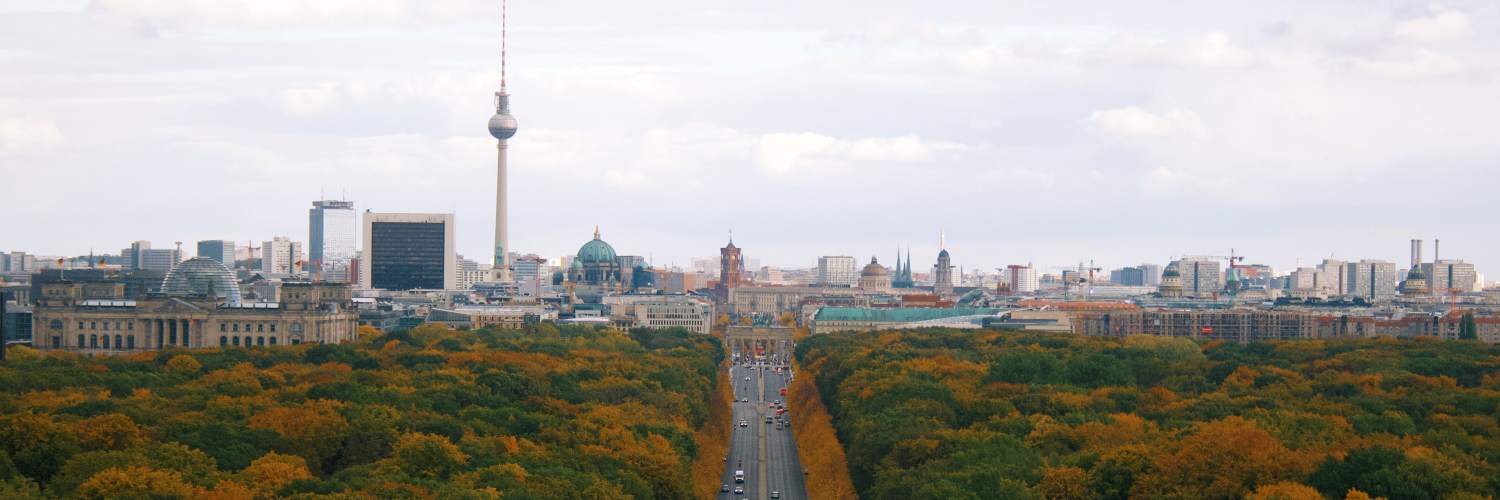
If this is your first time in Berlin, the fastest way from the airport to downtown is the FEX Airport Express train: it runs every 15 minutes from directly under Terminal 1 and reaches Berlin Hauptbahnhof (Central Station) in about 23 minutes for a €5 ticket. If you’d rather skip the trains altogether, a taxi or a pre-booked private car takes 30-45 minutes, depending on traffic and where you’re staying.
That’s the short answer. Here’s the rest of the Berlin travel guide first time visitors actually need, from landing at the airport to your first ride downtown.

How do I get from Berlin Airport to the city center?
Berlin has one airport, Berlin Airport (Berlin Brandenburg BER), with a train station built directly under Terminal 1. You have three realistic options:
- FEX Airport Express: 23 minutes to Hauptbahnhof, runs every 15 minutes, roughly 4:00 a.m. to 1:00 a.m.
- S-Bahn S9 or S45: slower (around 50 minutes to Hauptbahnhof) but stops at more neighborhoods, running every 20 minutes.
- Taxi or private transfer: 30-45 minutes, costs roughly €50-€80 depending on traffic and your exact drop-off point.
Both trains use the same €5 single ticket (zones ABC), so the FEX is simply the faster choice for the same price. If you’re arriving late at night, with a group, or with a lot of luggage, a taxi or a pre-arranged car is usually less stressful than dragging suitcases through a train transfer.
What’s the fastest way from BER to downtown Berlin?
The FEX. It departs from the station below Terminal 1, stops at Berlin Südkreuz and Potsdamer Platz, and ends at Hauptbahnhof in about 23 minutes. From Terminal 2, follow signs to the connecting walkway to Terminal 1; the station serves both terminals.
If you’re staying somewhere the FEX doesn’t reach directly, check whether the S9 or S45 gets you closer, or plan one U-Bahn or tram connection from Hauptbahnhof. Google Maps and the BVG/VBB apps both show live departures and platform numbers, so you can double-check before you board.
Berlin airport arrival guide: what happens after you land
A few practical things first-timers often don’t expect:
- Immigration and baggage claim are on the ground floor of both terminals: allow 20-40 minutes if you’re arriving from outside the EU/Schengen area.
- The train station is one level down (U2) from the arrivals hall, clearly signed in English and German.
- Taxi ranks are at ground level (E0), north and south sides of Terminal 1: taxis are metered and available 24/7, so you don’t need to book ahead unless you want a fixed price.
- Buy your ticket before boarding. Machines are at the station entrance and in the terminal. Trains are not gated, but inspectors do check, and riding without a validated ticket can mean an on-the-spot fine.
- SIM cards and currency exchange are available in both terminals if you need them before heading into the city.
If you’d rather have someone handle the logistics for you, flight tracking, a driver waiting with your name, help with bags, that’s exactly what a pre-booked Berlin Airport Transfer with Rydeu is for. You book your price in advance, the driver tracks your flight, and there’s no need to find a taxi rank or figure out ticket machines after a long flight.
Berlin public transport tips for getting around once you’ve landed
Berlin’s transport system (S-Bahn, U-Bahn, trams, and buses) is run by BVG and VBB, and one ticket works across all of them within your zone. A few tips that save first-timers time and money:
- Zones matter. The airport is in zone C. Most tourist sights (Mitte, Kreuzberg, Prenzlauer Berg) are in zone A. A single AB ticket costs less than an ABC ticket — check which zones your day’s plans actually need.
- Validate every paper ticket at the small yellow or red machines before you board. Digital tickets bought in the BVG or VBB app are validated automatically.
- A day ticket (Tageskarte) usually pays for itself after 3 trips, so if you’re sightseeing all day, it’s often cheaper than buying single tickets.
- U-Bahn and S-Bahn are not the same system: U-Bahn is the underground metro, and S-Bahn is the suburban rail network, but many stations connect both, and one ticket covers both.
- Trams only run in the eastern parts of the city (Mitte, Prenzlauer Berg, Friedrichshain), which surprises a lot of visitors coming from the west side.
Getting around Berlin: which option fits your trip
- Walking or cycling – Berlin is flat and bike-friendly; many hotels and hostels rent bikes by the day.
- U-Bahn/S-Bahn – best for longer distances across the city, runs late on weekends (all night Friday and Saturday).
- Bus/tram – useful for shorter hops and areas the metro doesn’t reach directly.
- Taxi or private car – best for early departures, late arrivals, groups, or when you’re carrying luggage between stops.
Most first-time visitors do fine with a 3-day or weekly transport pass plus the occasional taxi for early mornings or after a night out.
 Which is the Closest Airport to Eiffel Tower Paris? A Traveler’s Guide
  Frankfurt Airport Terminal 1 to Terminal 2 Distance – The Complete Travel Guide
  Which Airport is Closest to the Paris Eiffel Tower? A Complete Guide for Travelers
  Does It Snow in Rome, Italy? A Complete Guide to Winter in the Eternal City
  Distance London to Paris: How Far & Best Ways to Travel